Atlanta, Georgia – where the vibrance of inclusivity and acceptance intertwines with Southern charm, Atlanta Pride 2023 unfolded as a celebration of love, identity, and self-expression. While the event was a spectacular display of unity, one of the most captivating aspects was the fashion scene. Atlanta Pride 2023 contained an explosion of creativity, as attendees showcased an array of styles that pushed the boundaries of conventional fashion, reflecting the city’s diverse and inclusive ethos. The celebration of LGBTQ+ pride has been happening for years. According to the Library of Congress, on June 28th, 1970, on the first anniversary of the Stonewall Uprising, the first Pride marches were held in New York, Los Angeles, and Chicago.

Thousands of LGBTQ+ people gathered to commemorate Stonewall and demonstrate for equal rights. Since then, the LGBTQ+ community has been celebrating queer pride every year in June. However, Atlanta does things a little differently. The Atlanta Pride Festival commences on October 11th, or National Coming Out Day. According to the Atlanta History Center, Atlanta’s first pride parade was spurred by the national uprising of the equal rights movement. Atlanta’s own Lonesome Cowboys raids, 100 demonstrators—mostly white males—marched down Midtown’s sidewalks carrying “Equal Rights for Gays” posters. The march ended at Piedmont Park where a rally took place. The parade continues to take place every year at Piedmont Park.
The fashion scene at Pride was all about self-expression, celebration of the community, and activism. Pride festival attendee, John, was participating in the Dykes on Bikes march. According to Dykes on Bikes Atlanta, they are an LGBTQ+ women’s motorcycle contingent. They are queer women-centric, but not exclusive to queer women only. We are open to “any woman, any bike.” Therefore, John was wearing leather studded chaps, a rainbow metallic Speedo, a leather and chain harness, and a t-shirt that says “bans off our bodies.” John says, “I thought it was important to feature a message on our outfits, so we are wearing Planned Parenthood ‘Bans Off Our Bodies’ shirts.”

The Bans Off Our Bodies movement is a national abortion rights campaign. It is led by abortion rights supporters in response to unrelenting political attacks on our basic right to control our own bodies, our lives, and our futures. John, being a member of the trans community, also mentioned that they wanted to show off their body as much as they could to break traditional gender norms when it comes to fashion. John, amongst many others, showcased powerful messages on their attire. This proves that pride is not just about gay rights, it’s about human rights. On ANF’s Pride 2023 livestream, director of Equity and Engagement at The Atlanta Pride Committee, Steven Igarashi-Ball, says “The Atlanta Pride Committee is all about unity, visibility, and wellness. We need citizens who are committed to taking a stand. We need individuals who are committed to seeing this work through – and fighting until we have a cure.” This being said, bringing awareness of the things the LGBTQ+ community stands for is a major component of the pride festival.
Drag culture has a rich and multifaceted history that dates back centuries, transcending cultural and geographical boundaries. While the exact origins of drag are difficult to pinpoint, it has been a part of various societies, including ancient Greece and Shakespearean theater, where men often portrayed female characters due to societal restrictions on female performers. The modern drag culture as we recognize it today emerged in the early 20th century, particularly in the underground LGBTQ+ scenes of cities like New York, where drag balls provided a platform for self-expression and freedom.
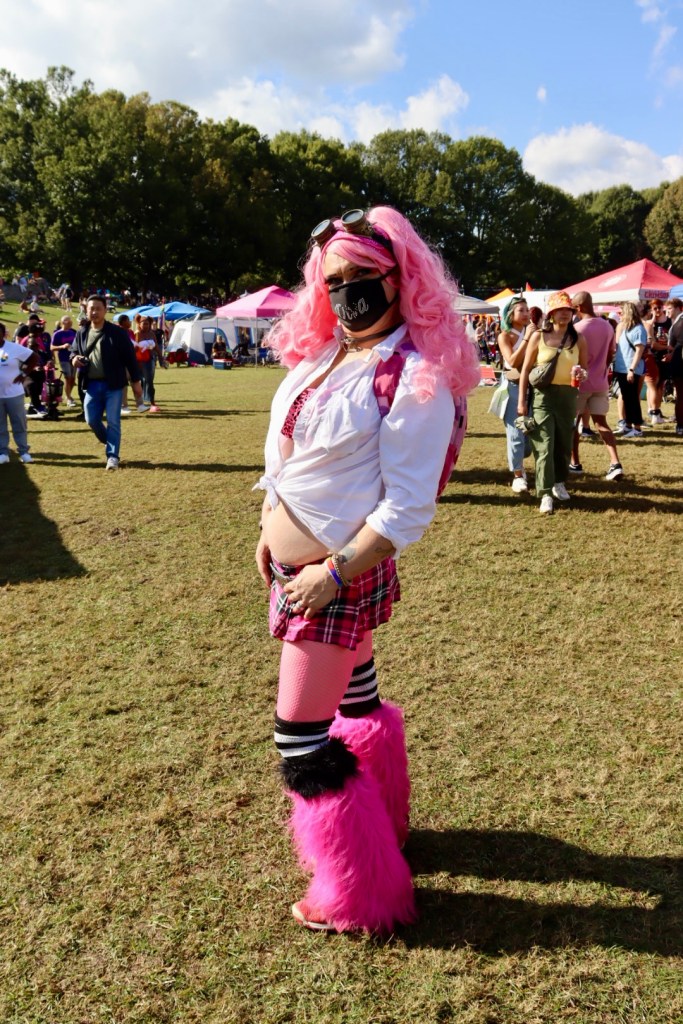
Drag gained significant visibility and acceptance during the LGBTQ+ rights movements of the 1960s and 1970s, becoming a powerful form of protest and celebration. Atlanta Pride attendee and drag queen, Destiny Rain, says “Drag is an important part of the pride celebration because of the awareness it brings to our community. With shows like RuPaul’s Drag Race and Pose, drag has gained coverage outside of the LGBTQ+ community. Queens have become powerful symbols of empowerment to our community.” Destiny was wearing what she would describe as “90s cyber-goth.” When asked how this makes her feel empowered, she says, “What I wear is a reflection of who I truly am on the inside.” Over the years, drag has evolved into a diverse art form, encompassing various styles and gender expressions. Drag culture continues to thrive, inspiring countless individuals and shaping the broader landscape of contemporary LGBTQ+ and entertainment communities.
The LGBTQ+ fashion scene has undergone a remarkable transformation over the years, evolving from the fringes to a prominent and influential force in the fashion industry. Historically, queer individuals have used clothing as a form of self-expression and identity, challenging traditional gender norms and embracing unique styles. In recent years, designers, models, and activists within the LGBTQ+ community have gained visibility, pushing for greater inclusivity and diversity in the fashion world. Queer designers have emerged at the forefront of the industry, creating gender-fluid and androgynous designs that appeal to a wide spectrum of identities. Fashion brands are increasingly recognizing the importance of LGBTQ+ representation, featuring queer models in their campaigns, and embracing diverse body types and gender expressions. LGBTQ+ fashion events and shows, such as The Blonds’ extravagant runway presentations and Queer Fashion Week, have become essential platforms, for celebrating the community’s creativity and innovation. This growing inclusivity in the fashion scene not only reflects changing societal attitudes but also empowers individuals within the LGBTQ+ community to express their authentic selves through clothing.
Fashion holds significant importance within the LGBTQ+ community, serving as a powerful tool for self-expression, identity, and empowerment. For many queer individuals, clothing choices are a means to challenge societal norms and rigid gender expectations. Fashion allows LGBTQ+ people to explore and embrace their authentic selves, offering a canvas where gender boundaries can be blurred and diverse identities can be celebrated. Moreover, the LGBTQ+ community has historically been at the forefront of fashion trends, influencing styles that have permeated mainstream culture.

Fashion becomes a medium through which queer individuals can assert their visibility, celebrating their uniqueness and contributing to a more inclusive society. Additionally, the industry has increasingly become a platform for activism, with campaigns and designs raising awareness about LGBTQ+ rights issues. By promoting diversity and embracing a spectrum of gender expressions, fashion has become an integral part of the LGBTQ+ movement, helping to break down stereotypes and foster acceptance and understanding on a global scale.
 rhiannonshakir.com
Leave a comment